

What is Catholic Femininity?
In today’s culture, femininity is often defined by external markers – beauty, independence, and self-expression. Secular femininity tends to focus on personal empowerment, career success, and breaking traditional gender roles. While some of these values are not inherently bad, they often miss the deeper meaning of what it means to be a woman.
Catholic femininity, on the other hand, is rooted in God’s design for women. It is not about conforming to cultural trends but about embracing the unique vocation God has given us as daughters of the King. Catholic femininity is about receptivity, generosity, and spiritual motherhood – whether lived out in marriage, consecrated life, or singleness. It is a call to holiness, modeled after the ultimate example of womanhood: the Blessed Virgin Mary.
The Foundations of Catholic Femininity
Catholic femininity is shaped by Scripture, Tradition, and the example of the saints. It is characterized by:
1. Receptivity to God’s Will
Women have a unique capacity for receptivity – not just biologically, but spiritually. Mary’s fiat (“Let it be done to me according to your word,” Luke 1:38) is the ultimate example of feminine receptivity. Catholic women are called to say “yes” to God in their daily lives, whether through prayer, service, or vocation.
2. Spiritual and Physical Motherhood
Every woman is called to motherhood in some form. For some, this means biological or adoptive motherhood; for others, it means spiritual motherhood – nurturing souls through teaching, discipleship, or acts of charity. St. Thérèse of Lisieux, though a cloistered nun, saw herself as a spiritual mother to souls around the world through her prayers and sacrifices.
3. Humility and Strength
Catholic femininity is neither passive nor weak. True femininity embodies both humility and strength. The world often equates femininity with power struggles, but Christ teaches a different way: “Whoever exalts himself will be humbled, and whoever humbles himself will be exalted” (Matthew 23:12). Look at St. Joan of Arc, who boldly followed God’s call while remaining obedient to His will.
4. A Heart of Service
Jesus Himself said, “The greatest among you shall be your servant” (Matthew 23:11). Catholic femininity is deeply connected to serving others, whether in family life, friendships, or society. St. Teresa of Calcutta exemplified this through her selfless love for the poor and dying.
5. Modesty and Dignity
Modesty is more than just clothing – it is an attitude of the heart that reflects a woman’s dignity. St. Gianna Beretta Molla, a wife, mother, and doctor, embraced her vocation with grace and modesty, showing that a woman can be both accomplished and deeply faithful.
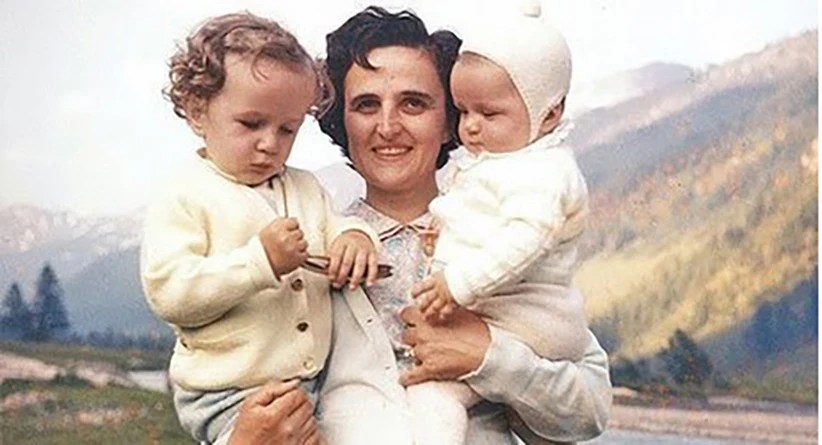
What opportunities exist for you right now where you can imitate Mary? In what ways do you already live out motherhood – whether physical or spiritual?
Catholic Femininity vs. Secular Femininity
| Catholic Femininity | Secular Femininity |
| Rooted in God’s design | Rooted in cultural design |
| Seeks holiness | Seeks personal fulfillment |
| Values humility | Values self-empowerment |
| Embraces motherhood (physical/spiritual) | Redefines or rejects motherhood |
| Finds identity in Christ | Finds identity in achievements |
While secular femininity often shifts with cultural norms, Catholic femininity remains constant because it is grounded in eternal truth. Society’s definition of femininity transforms with each generation, influenced by changing ideals, movements, and self-definitions. What is praised today as liberated or empowering may tomorrow be seen differently, leaving many women searching for an elusive sense of worth. Catholic femininity, by contrast, is unmoored from fleeting standards – it offers a firm identity rooted in God’s unchanging design. In its constancy, Catholic femininity reflects the stability of Christ, “the same yesterdays and today and forever” (Hebrews 13:8).
This constancy doesn’t imply rigidity but provides a deep and liberating freedom. Instead of being constrained by external cultural expectations, Catholic femininity invites women into a fuller understanding of themselves as loved by God, purposeful in their design, and uniquely called to reflect His love to the world. Against the whirlwind of trends, it becomes a lifeline, calling women not to conform but to transform, as St. Paul exhorts: “Do not be conformed to this world, but be transformed by the renewal of your mind” (Romans 12:2). Catholic femininity endures the test of time because it is built on the foundation of divine truth, offering stability in a world that often destabilizes our sense of self.
In a practical sense, this constancy equips Catholic women with the confidence to bring their faith into any circumstance. From the home to the workplace, from their relationships to cultural discourse, Catholic femininity witnesses to freedom in Christ. It doesn’t hinge on looking a certain way or achieving worldly markers of success but is lived in the quiet strength of knowing one’s worth in the eyes of God. This is the peace and joy that the saints revealed – the timeless call for every Catholic woman to emulate today. How has cultural messaging influence your perception of femininity? Which voices – the world’s or God’s – guide your sense of identity?
Living Out Catholic Femininity Today
So how can you embrace Catholic femininity in your daily life? Which area – prayer, service, modesty, or mentorship – might God be nudging you to grow in right now?
- Pray the Rosary and ask Mary to guide you in true femininity.
- Study the lives of female saints and find inspiration in their virtues.
- Practice spiritual motherhood by encouraging and mentoring younger women.
- Embrace modesty in dress, speech, and actions.
- Seek holiness in your state of life, whether as a single woman, wife, mother, or religious sister.

Catholic femininity is not about fitting into a rigid stereotype but about becoming the woman God created you to be. When you embrace your identity as a daughter of God, you will find joy, peace, and purpose.
Reflect on your own understanding of femininity. Where does it align with Catholic teaching? Where does it need to be transformed? Take one step this week to grow in Catholic femininity – whether through prayer, service, or deepening your relationship with Our Lady.
True femininity is a gift. Will you embrace it?
 Becoming
Leave a comment